
Apollo ILS/LSP
The Apollo® ILS (Integrated Library System) was designed from the ground up by practicing librarians to be a hosted ILS for public libraries. This provides our customers with amazing efficiencies and connectedness. And those customers are only public libraries with fewer than 300,000 items. Apollo customers say it is easy to use and dramatically increases ease of use and efficiency. Your staff will be able to accomplish more and deliver more to patrons with less time.
For many years in a row, Apollo tops major survey results!
Delightful and efficient for your staff
Our customers simply rave about how much easy Apollo is and how more efficient they are (remember the awards we’ve won?). From time-savers, to error prevention, to patron joy and leveraging of 3rd party resources, Apollo is making a difference. And this is all with only a browser and no server or software to install.
Here are a few examples:
- Circulation Management:
- Wonderfully streamlined Checkin interface
- Text, email, and phone notifications
- Communal catalog and virtual consortium capabilities with FlexShare™ Consortia
- Auto-Calling for overdue and reserve notifications (with NO on-site hardware required).
- Self-checkout with only a PC.
- Collection Management:
- Acquisitions.
- Delete items without losing information.
- Batch Weed/Delete.
- Powerful authority control.
- Other Advantages
- “Ask a Librarian”/Gabbie® two-way texting, with Curbside Console available
- Link Family Members
- Powerful report to monitor text/email/phone call notice success/failure
- New Patron Sign-up on-line
- Integration with 3rd party products/services with availability info.
Empower Patrons as Never Before
With Apollo, your patrons get a state of the art, gorgeous catalog. And you get more exposure for those expensive 3rd party e-Resources.
- Gabbie® 2-way texting
- Kids’ Catalog
- Responsive catalog
- Author reservation wizard – Reserve Express℠
- Enhance your website with numerous ways to help your patrons get more out of your library.
- Single log-in to your e-Resources.
- Self-checkout with only a PC.
- On-line payments.
- Patron sees how much they’ve saved by borrowing instead of buying
State Specific Advantages
Apollo’s hosted-only approach lets us reduce your workload by making automatic connections with your state catalogs, ILL systems, etc. Here are some examples:
- Texas: OCLC Navigator NCIP integration for the most hassle-free ILL management possible. Also you don’t ever upload MARC or patron data.
- Iowa: auto-updating of SILO state catalog with additions and deletions.
- New Hampshire: Full integration with new state ILL system. Import from NHU-PAC for cataloging.
- Kansas: Z39.50 item availability polling for ILLs.
- MIssissippi: Z39.50 item availability polling for ILLs.
- Michigan: MeLCat ILL integration with NCIP. Auto-update of materials including availability information. Import from MeLCat for cataloging
- Maine: auto-emailing of additions to MaineCat and pending interface with state ILL System.
- States with OCLC cataloging: Capture of OCLC number for titles and auto-emailing of additions and deletions
We do all this and more at no charge.
Smooth, Comfortable Migration
The free trial lets you virtually eliminate any leap of faith. You send us a copy of your data using the easy and secure upload page for only your library. We’ll import it into Apollo in a day or three then we’ll turn you loose on it! You can verify that we’ve gotten all your data copied and imported correctly. You can try everything (circulate, catalog, run reports, etc) as well as see how Apollo performs in your library. Plus, Apollo can use existing barcode labels, scanners, and printers.
So, while your library continues to operate normally, we’ll work together to answer your Apollo questions and address your issues. Take your time, because your comfort comes first. If you decide against Apollo, we’ll delete your data and wish you well. If you decide to go with Apollo, you and any staff/volunteers can take the free on-line, live training. We’ll also get on the phone with you, one-on-one, to make sure all the setup items and polices are configured the way you want them. Then we’ll pick the magic date! You’ll send a fresh upload of your data after you close one day, and we’ll replace all the trial data overnight. You can open the next day with Apollo! It IS that easy.
Concerned about the migration process? Read our Migration to Apollo (PDF).
Pricing
Apollo is a service, offered on an annual subscription basis, just as you might pay for magazines or databases. We don’t nickel and dime you. All current features are included in the base subscription price except just four: Acquisitions, Syndetics Unbound, Auto-Calling, and Gabbie®. You can have unlimited users and any number of computers using Apollo. Subscriptions include all server functionality, backups, customer support, free upgrades, and access to a user forum. A contract is not required. You can cancel at any time and receive a refund of your unused subscription term. Pricing is quoted on an individual library basis, so contact us for details on your subscription.
System Requirements
Because of our Internet delivery, the system requirements for Apollo are a breeze. We don’t lock you in to particular hardware or a particular operating system. Plus, since Apollo is hosted only, it’s optimized for on-line use, exhibiting excellent response times.
Browser Requirements
Patrons:
- A reasonably modern Web browser for any PC or mobile device.
Staff:
- Browser: Firefox, Chrome, or Safari. Edge will work in some cases.
- A high-speed (DSL, cable, or better) Internet connection.
Device Recommendations
- Reasonably modern PC or tablet, on which Web browsing is not painfully slow.
- At least 1024×768 screen resolution for a PC.
Apollo will boost your library’s image. Patrons will experience easier, better access and a smoother running operation. Your staff will be more productive and have more fun on the job. Your collection data will be pure and collection decisions will be well informed. Dedicated solely to public libraries, Apollo will make a difference at your library.
See case studies and customer comments about an ILS created just for you!
Public libraries are an integral part of our communities. A library not only offers books and resources, but it is also a hub for information and social interaction. However, running a library can be a daunting task. That’s why technology has been a game-changer in making library management more efficient and accessible. Public library systems like Biblionix’s Apollo ILS are transforming library management for public libraries, designed with features that make circulation management and collection management easier.
Apollo ILS (Integrated Library Systems)
If you’re a public librarian looking for a reliable and efficient solution to help manage your library’s catalog, look no further than the Apollo® ILS. Designed with practicing librarians from the ground up, this hosted ILS has been specifically crafted to provide amazing efficiencies and connectedness to libraries with fewer than 300,000 items. Apollo customers rave about its ease of use, and its ability to dramatically increase staff efficiency, allowing you to manage more tasks and provide better service to your patrons in less time.
Here’s why so many public libraries are turning to Biblionix’s Apollo ILS for better library management:
Boosts efficiency
The primary reason libraries are adopting Apollo ILS is to boost their efficiency. The software streamlines circulation management with key features like text, email, and phone notifications for overdue and reserve notifications. Libraries also benefit from the communal catalog and virtual consortium capabilities with FlexShare Consortia. Apollo ILS’s auto-calling feature helps libraries manage overdue books and reserves without the need for onsite hardware. Another feature is the management of collections that includes making acquisitions, deleting items without losing information, batch weeding and deletion, and powerful authority control.
Empowers Patrons
Apollo ILS empowers patrons to access library resources with ease. The software provides state-of-the-art catalog features and allows public libraries to display third-party e-resources at no extra cost. The approach offers more exposure for library resources to the patrons and integrates them into a familiar online shopping experience. The user-friendly interface is also customized to allow patrons to interact with the library resources with ease.
Migrate Without Risk
Public librarians can easily try Apollo ILS for free. The trial period eliminates any leap of faith when upgrading from another ILS platform to Apollo. The software ensures that the migration is smooth and automatic with minimum disruption to the library patrons during the process.
User-Friendly
Apollo ILS is designed by practicing librarians to ensure that everything runs smoothly and efficiently. The system is user-friendly and easy to use, making staff members more productive, and delivering results to patrons in less time. With the user interface, Apollo ILS allows basic training that is easy for staff members, enabling front desk staff to handle circulation functions.
Unlock Efficiencies and Delight Your Staff and Patrons With the Help of Apollo ILS
The Apollo ILS transforms library management for public libraries by offering an automated public library system that maintains efficiency and connectedness. Biblionix’s software is designed with features that make circulation management and collection management easier, so your library can better serve friends and neighbors in your community. With Apollo ILS, public libraries can offer their patrons an innovative technology that is efficient and effective in delivering valuable services. Contact us today for your free trial!

POWER TO THE PUBLICS
Getting Started with Apollo
See a brief Apollo video
Subscribe to our newsletter
"You have got to be the most helpful company we have ever dealt with."
Marcia Johnson, Director
Miami Public Library
Oklahoma
Read our blog
The Searches and Reports Report: A Hidden Gem for Collection Development
What If Your Library’s Software Was As Committed As You Are?
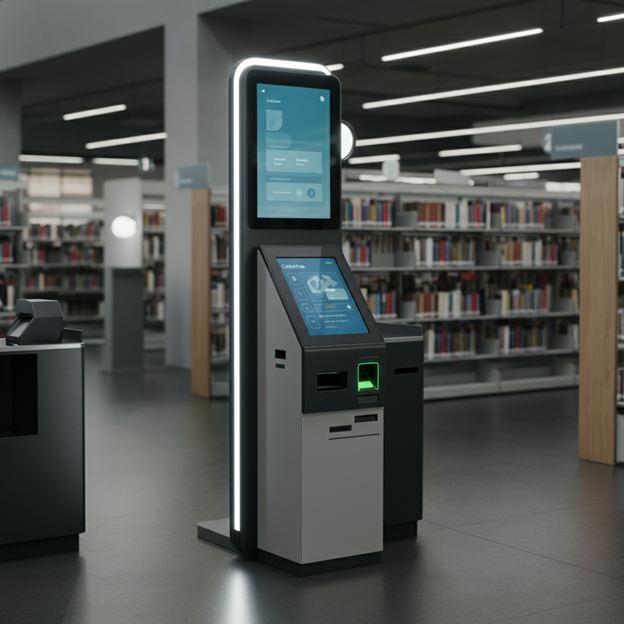
The Unsung Hero of Libraries: The Library Checkout System

The Evolution of the Library Catalog System: From Chaos to Customization

How to Access the Full Potential of Libraries with Integrated Library Systems
Introducing The Apollo ILS/LSP
For your viewing pleasure! In this video you'll get a quick introduction to the Apollo ILS/LSP, and learn what it can bring to your library.